



Continuous closed casting products
Our solutions
Continuous closed casting products: suitable for any steel grade and any casting format, they provide lubrication, protection and thermal control during the process.

Our products designed for continuous closed casting


Additional info
What are the advantages of continuous closed casting versus free casting
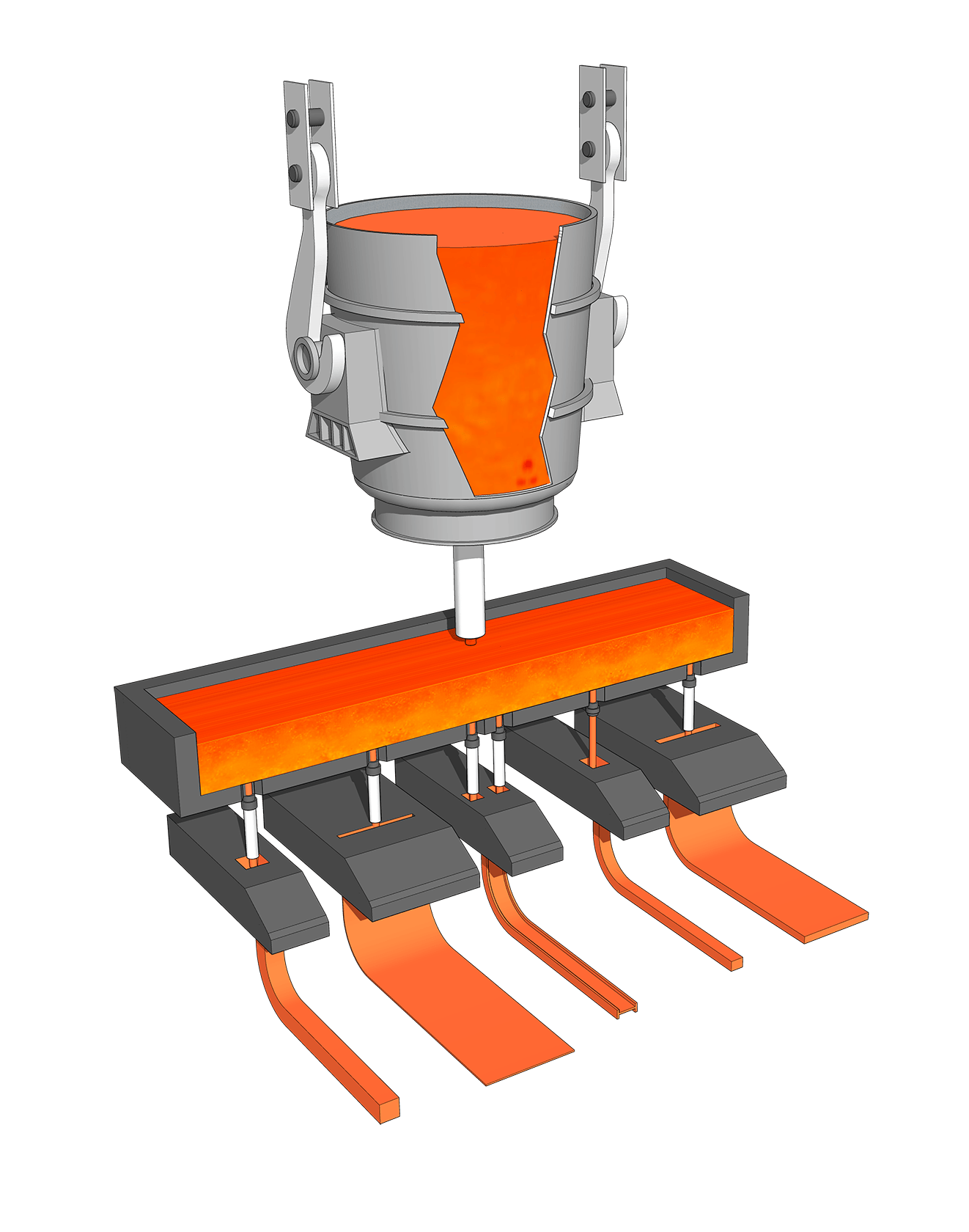
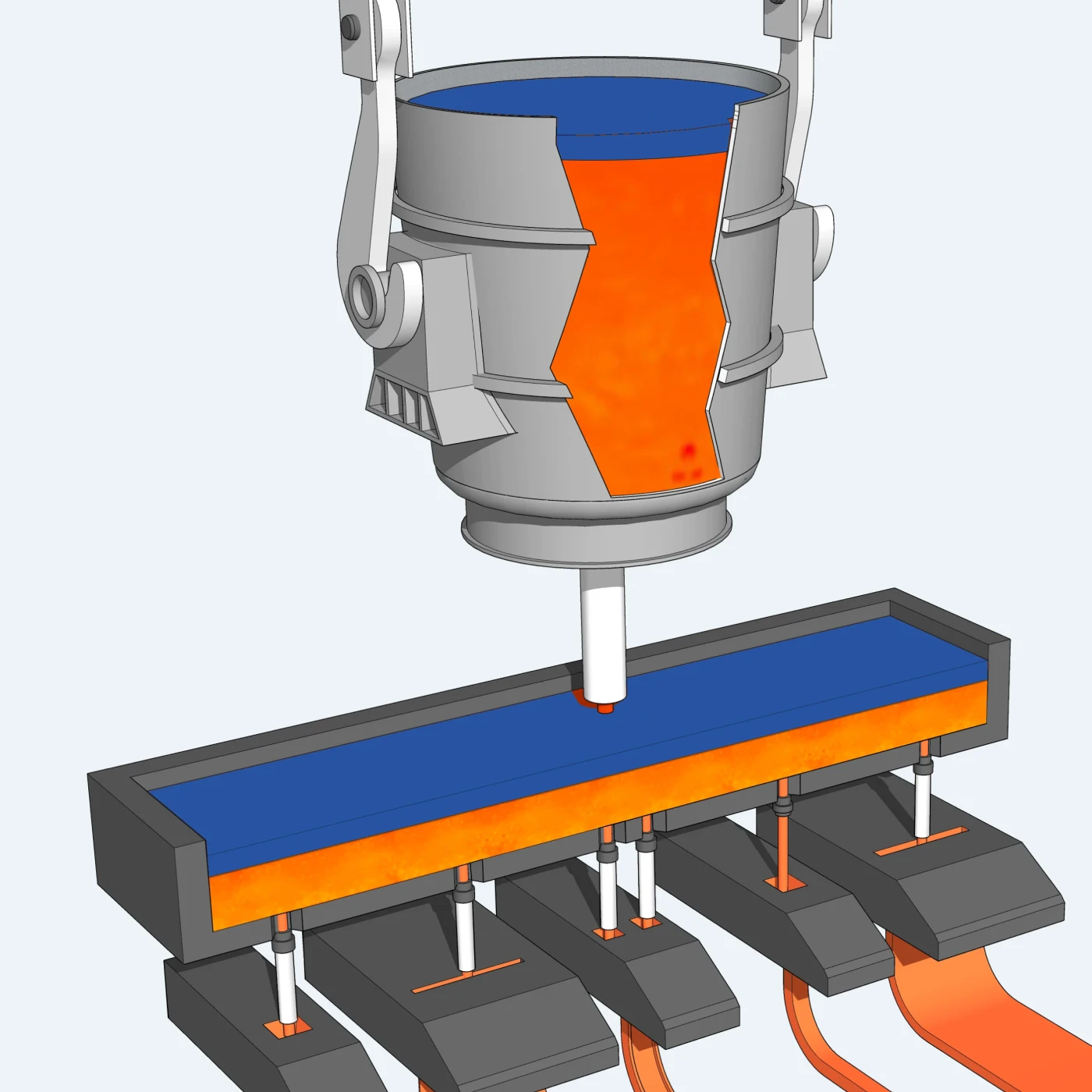
Closed casting, unlike free casting, has a more controlled flow and reduced turbulence, thanks to the use of ceramic tubes (called SEN) and continuous casting powders that eliminate exposure of the liquid metal to air, reducing the risk of oxidation and heat loss.
The use of casting powders also provides better lubrication than oil and greater control of heat exchange in the ingot.
All this leads to the improvement of the surface of semi-finished products.
Prosimet developed the Proil product in order to bring the benefits on lubrication and greater control of heat transfer even in open casting, improving the quality of semi-finished products without incurring the significantly greater expense of protected casting.
How to ensure billet quality during the continuous casting process
The quality of billets in continuous casting depends on multiple factors involving all stages of the production and casting process.
Through careful secondary metallurgy, the chemical quality of the steel is ensured and most of the impurities are removed. The use of high-quality refractories also ensures the reduction of exogenous inclusions in the finished product.
In the tundish, the use of the double-layer practice with appropriate products (active basic powder in contact with the steel and insulating powder on top of this to provide thermal insulation) allows for greater cleanliness of the steel.
In the ingot mould, the casting powder should be properly selected based on the steel brand, size, machine parameters and casting speed.
Primary cooling in the ingot is strongly influenced by the powder used, while secondary cooling must be properly adjusted. Indeed, cooling is a crucial step in determining the microstructure and mechanical properties of the final product.
How casting parameters affect the final properties of billets
Casting parameters have an important influence on billet properties. They, by checking the solidification and microstructure of the metal, determine the uniformity of the material and the presence of defects.
The composition of the steel brand influences its chemical and physical properties.
The casting temperature (specifically between the liquid steel temperature and the solidus temperature called superheat) affects the solidification time and crystallization potential, so it must be matched to the brand of steel, casting speed and cooling.
Casting speed, in turn, affects in-slot turbulence, cooling and microstructure formation.
Oscillation parameters of the ingot must take these factors into account and allow for the infiltration of casting dust in a way that promotes lubrication.
Cooling should be adjusted to avoid surface defects, arriving at straightening when the billet is sufficiently solidified to withstand mechanical stress while outside the ductility pit.
Contact us
"*" indicates required fields